Canalblog Tous les blogs Top blogs Emploi, Enseignement & Etudes Tous les blogs Emploi, Enseignement & Etudes
Suivre ce blog Administration + Créer mon blog
MENU
Formation Continue du Supérieur
2 juin 2013

Soft Skills for ScientistsSoft Skills for Scientists

http://chronicle.com/img/photos/biz/icons/on-hiring-nameplate.gifByGina Stewart. You’re a science Ph.D. seeking a job outside academe, but you’re not sure you have the requisite skills. The good news is you’re probably more prepared than you think. Nonacademic hirers want people who are self-starters and who can work independently. You already possess all of these skills, and more. As a Ph.D. scientist, you’re capable of asking and answering important questions that build on current knowledge and advance our understanding of our world. You’re accustomed to coming up with and testing hypotheses, gathering and interpreting data, and communicating the results—both positive and negative. And you know how to manage a project, raise funds, and present your ideas at conferences. All of these skills are transferable to a number of professions outside academe, including industrial research, policy and think-tank work, business administration, and patent law. Read more...
2 juin 2013

People without Jobs — Jobs without People: Decoding Canada’s ‘skills crisis’

http://aka-cdn-ns.adtechus.com/images/261/Ad4096261St1Sz2666Sq22265231V0Id5.gifBy . Canada has 1.33 million unemployed workers, yet business hired 338,000 temporary foreign workers last year, citing shortages in low-skilled jobs. Laid-off welders in Ontario sit idle, while oilsands employers in Alberta are chronically short-handed. High-skill jobs go unfilled, yet university graduates can’t find work. Canada has 1.33 million unemployed workers, yet business hired 338,000 temporary foreign workers last year, citing shortages in such low-skilled jobs as fast-food servers.
Why? One reason cited has been called the skills mismatch or skills shortage, phrases that refer to the growing gap between the skills Canadian employers say they need and the ones job seekers can provide. Employers say it’s one of the toughest challenges they face; the federal government made it the centrepiece of its 2013 budget, with a training incentive grant for employers called the Canada Job Program. Read more...
1 juin 2013

Competências Intercurturais: A importancia emergente na Educação Superior

http://gallery.mailchimp.com/0b90ac0d781102c05e343c4e1/images/entete_CAEI_portugais_newsletter.png“Competências Intercurturais: A importancia emergente na Educação Superior”
As habilidades interculturais são consideradas como o pilar da educação superior internacional. Que são habilidades interculturais? Como podem ser manejadas? Que repercussões ou implicações têm sobre os educadores e professores?
Este webinário tratará os resultados da primeira pesquisa centrada nas habilidades interculturais. Igualmente, serão discutidas as experiências, melhores práticas e aprendizagens na melhoria destas competências e explorados os desafios e implicações que os educadores devem considerar ao desenvolver suas habilidades interculturais, num contexto institucional.
Darla K. Deardorff é secretária geral da Associação dos Administradores de Educação Internacional (AIEA), baseada na Universidade de Duke, EUA. Ela é também pesquisadora no Programa em Educação da Universidade de Duke e ocupou cargos de liderança em nível nacional na NAFSA e no Fórum sobre Educação no estrangeiro. Editora do The Sage Handbook of Intercultural Competence (Sage, 2009), ela conta com numerosas publicações sobre as questões interculturalais e de educação internacional. Ela também foi editora principal do  Sage Handbook of International Higher Education, (Sage, 2012) com os coeditores Hans de Wit, John Heyl e Tony Adams. Building Cultural Competence (Stylus, 2012) é outro de seus livros recém-publicados. Após perto de 20 anos de experiência no campo da educação intercultural, ela dá corsos de educação internacional e de comunicação intercultural e ensina na Harvard University’s Future of Learning Institute, o Summer Institute of Intercultural Communication em Portland, Oregon, na Leeds Metropolitan University no Reino Unido e no Monterey Institute for International Studies. Ela também oferece conferências, formações e workshops no mundo inteiro sobre competência intercultural, avaliação em educação internacional e liderança global e atua como consultora e formadora nestas questões. Os modelos de competência intercultural desenvolvidos a partir de suas pesquisas estão sendo utilizados em muitos países e ela recebeu vários prêmios relacionados com seu trabalho. Fundadora de ICC Global, seus campos de especialidade incluem a formação intercultural, o diagnóstico e a avaliação, a formação/desenvolvimento do corpo docente, currículo em internacionalização, liderança global e acompanhamento intercultural. Ela obteve seu Mestrado e Doutorado da North Carolina State University, EUA.
1 juin 2013

Future Directions conference promotes skills for employment in university courses

http://www.heacademy.ac.uk/assets/sites/hea1/pages/annual-conference-2011.jpgThe latest Future Directions conference was an opportunity for academics, careers advisers and university managers to share their experiences about how to make the sort of skills required in employment a fundamental aspect of a student's course - without significantly increasing the workload for undergraduates and their lecturers.
The Future Directions for Skills and Employability event on 15 May was jointly organised by HEFCW, QAA Wales and the HEA. The conference also addressed how people already in work could gain higher skills and qualificiations while working.
Martyn Flynn, a talent aquisition manager for the second largest graduate recruiter in the UK, Enterprise Rent-A-Car, said: "By helping universities put crucial transferrable skills at the heart of their students' courses, we are giving our future graduate trainees the edge that they need to compete in the tough recruitment market. Read more...
1 juin 2013

Skills for the digital economy

http://2.bp.blogspot.com/-fKag1zsmmFA/TmhpGfmaPZI/AAAAAAAAADE/l2BFF4kPiY8/s1600/Bandeau904x81.pngBy Simone Stelten. Digital economies are powered by skills. People with the high-end skills needed to invent and apply new technologies are in high demand the world over. At the same time, the portfolio of basic skills needed to navigate technology-rich environments and function effectively in our connected societies has expanded.
How severe is the shortage of ICT skills? And what needs to be done to fill the gaps?
Today, 6% of total employment in OECD countries consists of ICT-specialists and ICT-intensive occupations account for more than 20% of all employment. OECD data on Key ICT Indicators shows that countries differ considerably in the share of ICT-intensive employment, ranging from high levels such as 35% in Luxembourg or 28% in the UK to 15% in Portugal and Greece or 11% in Turkey (data for 2010). Growing skills shortages have become a global concern. The Manpower Talent Shortage Survey 2012 puts IT positions at number 5 on the global list of top 10 jobs that employers are having difficulty filling. Only three years ago, IT professionals did not even feature on this list. Read more...
30 mai 2013

Valoriser mes compétences

http://www.mpfm.fr/template/mpfm/img/entete/logo.pngDévelopper ses compétences professionnelles permet d'anticiper l'évolution des métiers, de favoriser son employabilité. Découvrez l'économie régionale, les besoins en recrutement, vos droits à la formation pour accéder à de nouvelles perspectives professionnelles.
Retrouvez toutes les ressources qui vous guideront dans votre parcours professionnel

1. Quelles sont les tendances du marché de l'emploi?

Appréhender les enjeux en matière d'emploi et de formation en Midi-Pyrénées.
Les opportunités régionales.
Vous souhaitez connaître les secteurs porteurs en Midi-Pyrénées? Les pôles de compétitivité (regroupement d'entreprises, d'organismes de formation et de centres de recherche) offrent des oppportunités d'emploi dans les années à venir.
2. Quels sont mes droits à la formation?

Réaliser un bilan de compétences, comprendre le DIF, le CIF, et la VAE et trouver les structures pour m'accompagner.
DIF? CIF? VAE?
Vous recherchez un complément d’information sur un dispositif, retrouvez toutes les informations pratiques dans les fiches techniques! Tous vos droits à la formation: fiches techniques.
3. Quelle formation?

Consulter les formations proposées en Midi-Pyrénées.
http://www.mpfm.fr/template/mpfm/img/entete/logo.png A gcuid scileanna gairmiúla a fhorbairt Is féidir le réamh-mheas ghnó atá ag athrú, a chur chun cinn a n-infhostaitheacht. Faigh amach an gheilleagar réigiúnach, riachtanais earcaíochta, do cheart chun rochtain a fháil ar oiliúint le haghaidh deiseanna gairme nua. Níos mó...
26 mai 2013

Attracting foreign skills a circular process

http://enews.ksu.edu.sa/wp-content/uploads/2011/10/UWN.jpgBy Michael Gardner. Foreign academics are among the highly skilled workers that Germany wants to recruit to maintain its economic dynamics. At the same time, enabling foreigners who have earned a doctorate at a German university to return home is a key aspect of Germany’s overseas aid approach and is supported by higher education and development institutions and organisations. Despite Germany having fared comparatively well during the economic and financial crisis, concern has been mounting over the recruitment of junior engineers and natural scientists. Read more...
19 mai 2013

Torino Process Conference declaration - 2013

http://www.etf.europa.eu/webatt.nsf/0/70A6E416CD3A1480C1257B6600534F49/$File/TP13_479.jpgThe conference ‘Torino Process: Moving Skills Forward’ has concluded with a declaration. The document, agreed among the participants of the conference and based on the findings of the second round of the Torino Process, spells out the main policy priorities in the vocational education and training for 25 ETF partner countries east and south of the European Union. Read the Torino Process Conference declaration - 2013.
Torino Process Conference declaration - 2013

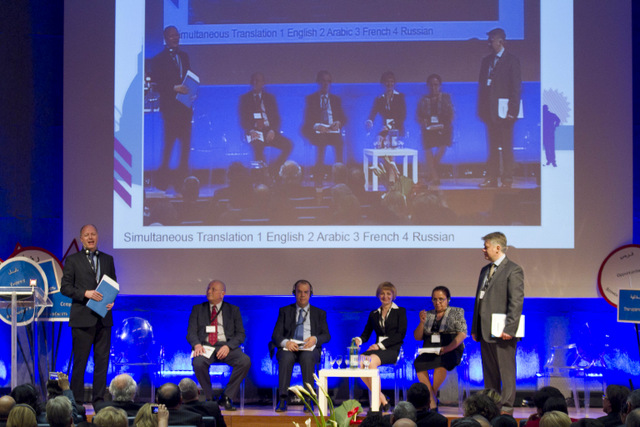
The Torino Process conference, ‘Moving Skills Forward’, hosted by the European Training Foundation (ETF) in Turin on 8-9 May 2013 has brought together representatives of the ETF partner countries, European Union Member States and international organisations to discuss how to move skills forward.
Inspired by the findings of the Torino Process 2012 involving 25 countries, and informed by the experiences of the ETF partner countries, international best practice, and the EU 2020 Strategy, EU external relations policies and Copenhagen Process on enhanced cooperation in vocational education and training (VET), we have focused on present and future demand for skills as well as the processes needed to achieve progress. The goal is innovative, inclusive, resilient lifelong learning systems that support sustainable growth. The conference has been a valuable opportunity for policy leaders, practitioners, experts, the business community and civil society to share knowledge and experience, and to build a network of expertise which can move skills forward.
It has also been an important forum for ETF partner countries to share achievements and to learn about policy progress in other countries. We acknowledge the important progress we have made in developing and implementing VET policies since 2010. Policy makers increasingly recognise that VET is essential to meet the needs and aspirations of young people and adults for jobs, growth and social inclusion. The Torino Process has had an impact in our countries and we welcome its further development in 2014, which will see a stronger focus on country-led analysis and wider participation of stakeholders, including regional and local authorities, the business sector and civil society. We also welcome the opportunity in 2014 to focus on the impact of policies, their relevance, sustainability, cost-effectiveness and contribution to innovation on the basis of evidence in a policy cycle perspective. We acknowledge the validity of the Torino Process principles: their holistic approach to education and training; their emphasis on national ownership and leadership; the active participation of social, political and economic stakeholders; and the focus on evidence to guide policy analysis and decision-making. We support the aim of the Torino Process, namely to increase the evidence base for policy development. The conference showed more countries taking the lead in analysing VET policies in the light of their contexts, visions and labour market needs.
The conference confirms the main policy priorities facing partner countries:
■ A shared, long-term vision focused on the development and use of relevant skills for better quality jobs for young people and adults in partnership with VET providers and business.
■ The role of innovation and forward-looking policy-making to enable education and training to respond to current and future needs and equip citizens with better skills for employability, entrepreneurship and successful transition from education and training to work.
■ The closer integration of learning and work by actively engaging businesses both large and small at national, local and sectoral levels, and diversifying VET provision also through post-secondary institutions and work-based learning.
■ Making social inclusion a key transversal principal in VET policy and practice.
■ Improving the attractiveness of initial and continuing VET through frameworks for quality assurance; national qualifications systems and pathways for progression and participation that lead to valued employment.
■ Enhancing the quality of VET by developing the competences of teachers and trainers to support better learning outcomes.
■ Effective sharing of responsibilities in the governance of education and training systems, including sound policy coordination across government and between national and local levels, including business and civil society.
Meeting the challenge of these priorities requires leadership which ensures that policy formulation and implementation is monitored and evaluated to benchmark progress. In this respect, the conference supports the further development of the Torino Process analytical framework towards stronger analyses of the outcomes, cost-effectiveness, sustainability and innovative capacity of public policies. The conference also confirms the need for policy making bodies to engage in a joint policy learning cycle, to assess the impact of policies, learn from experience and move forward to deliver relevant skills. The conference outlines the following areas for joint action to move skills forward:
1. Identify areas for policy support in each country using evidence, analysis, scenarios and foresight, and prioritise them for follow up and implementation through strategies and short-term deliverables that are realistic in the national context;
2. Monitor progress on the basis of indicators measuring results using the 2012 Torino Process as a national baseline: in addition, for interested countries, developments can be monitored against relevant EU, ETF and international benchmarks for education and training;
3. Increase the use of evidence in policy making, assessing what works, and disseminating good practice achieved bearing in mind national contexts;
4. Broaden participation in policy analysis and policy making to actively include all relevant stakeholder groups, including young people, making use of social media to increase public policy transparency and participatory processes;
5. Develop methodological tools to support policy development in the partner countries according to the priority areas identified
6. Ensure education and training are labour-market oriented and serve entrepreneurial and local communities with the active involvement of business at all levels.
We welcome the ETF’s support and cooperation in policy analysis and policy learning. We call upon the EU and the international community to work together in the on-going effort to move skills forward. We thank the EU and the ETF for this rich learning opportunity and look forward to the next round of the Torino Process in 2014. Read the Torino Process Conference declaration - 2013.

12 mai 2013

The “Skills Mismatch” and the Myth of the Irrelevant University

By Allan Rock. Allan Rock, President of the University of Ottawa, decimates the argument that universities are “out of touch” and not producing graduates for “real jobs”. President Rock gave the following speech on May 9, 2013, to the Canadian Club of Ottawa. Thank you so much for your warm welcome. I am grateful to the Canadian Club for the opportunity to speak today. I also want to thank the distinguished Head Table guests for joining us. This is a very special week for the University of Ottawa. Today, we launch our annual Homecoming events, 2013 edition. In the next few days, we expect to host hundreds of proud alumni. The sounds you'll hear from Sandy Hill will be from the echoes of memories shared and the joy of friendships renewed. It promises to be a great weekend. Read more...
9 mai 2013

Valoriser les compétences des seniors et des jeunes

http://travail-emploi.gouv.fr/IMG/rubon2232.pngPar Scripto Sensu pour le GIP Alfa Centre. 3 objectifs: favoriser l’emploi des jeunes en CDI, maintenir les seniors en activité ou en recruter et assurer la transmission des compétences. À l’appui du dispositif: des aides financières pour les entreprises et un soutien méthodologique.
Négociation collective

Le contrat de génération vise à organiser la transmission des compétences entre jeunes et seniors au sein de l’entreprise. Son objectif est donc d’inciter à la négociation sur l’intégration des jeunes, leur formation, le tutorat et les transferts de compétences. Cette négociation est obligatoire pour les sociétés de plus de 50 salariés.
99,5% des entreprises éligibles à l’aide financière

Les entreprises de moins de 300 salariés, qui emploient près de 60% des salariés, pourront bénéficier d’une incitation financière pour mettre en œuvre le contrat de génération. L’aide est d’un montant de 4 000 € par an pendant trois ans pour l’embauche en CDI d’un jeune et l’engagement du maintien dans l’emploi d’un salarié de 57 ans et plus. Pour bénéficier de cette aide, les entreprises de 50 à 300 salariés devront toutefois être couvertes par un accord relatif au contrat de génération (accord d’entreprise ou à défaut, plan d’action ou accord de branche). Elles peuvent aussi bénéficier de l’appui d’un consultant pour la mise en place de leur GPAC (Gestion prévisionnelle des âges et des compétences). Suite de l'article...
http://travail-emploi.gouv.fr/IMG/rubon2232.png Trí Scripto sensu le haghaidh GIP alfa Lárionad 3 chuspóirí. Fostaíochta don aos óg a chur chun cinn i CDI, a choimeád ar bun oibrithe níos sine i bhfostaíocht nó earcú agus a chinntiú an t-aistriú scileanna. Chun tacú leis an gléas: cúnamh airgeadais do ghnólachtaí agus tacaíocht mhodheolaíoch. Níos mó...
Newsletter
53 abonnés
Visiteurs
Depuis la création 2 803 084
Formation Continue du Supérieur
Archives