
 By Scott Jaschik. Brown University announced Friday that it is waiving its application fee (currently $75) for applicants who participate in various federal programs for low-income students. More...
27 avril 2017

By Scott Jaschik. Brown University announced Friday that it is waiving its application fee (currently $75) for applicants who participate in various federal programs for low-income students. More...
By Scott Jaschik. Leading history journal apologizes for assigning review of book on inequality and urban education issues to a professor viewed by many as a white supremacist. More...
By Scott Jaschik. Inside Higher Ed is pleased to release today our latest print-on-demand compilation, "The Challenge of Change," which includes articles related to enrollments, college costs, budget models and more, for all kind of colleges. You may download the booklet, free, here. Read more...
By Scott Jaschik. The Maryland General Assembly has approved legislation that would ban the state's colleges -- public and private -- from asking prospective applicants about their criminal records, The Baltimore Sun reported. Read more...
By Scott Jaschik. Pulitzer Prizes were announced Monday, including the following to academics:
 La discrimination de genre se niche même là où on ne l'attend pas. Une équipe internationale, impliquant Demian Battaglia, chercheur CNRS à l'Institut de neurosciences des systèmes (Inserm/AMU) et des chercheurs de Yale et de l'Institut Max Planck (Allemagne), vient de démontrer que les femmes sont sous représentées dans le mécanisme de révision des publications scientifiques. Ces travaux sont publiés dans la revue eLife le 21 mars 2017.Les discriminations de genre sont un phénomène bien connu.
  Wir erleben einen rasanten, von digitalen Technologien getriebenen Umbruch. Die Basis dieser digitalen Transformation bilden Sensorik, Maschinelles Lernen und Robotik. Diese Techniken und Anwendungen werden immer günstiger und sind in immer größeren Umfang verfügbar. Nützliche neue IT-basierte Systeme, zum Beispiel zur Fahrerassistenz, für Smartphones und die wachsende Gerätevernetzung, werden in unserem Alltag zunehmend wichtiger und bereiten den Weg für die Einführung autonomer Systeme. More...
 Oxford has been around for 900 years, Cambridge for 700; and some say the prestigious Ivy League is so-called because it refers to the old, leaf-covered institutions of the United States. The league counts among its members seven of the nine colleges chartered before the American Revolution. More...
 The Australian Government's National Innovation and Science Agenda identified science as one of the critical elements for Australia to deliver new sources of growth, maintain high‑wage jobs and seize the next wave of economic prosperity. Science—including the natural, physical and life sciences, medical and health sciences, mathematics, engineering and technology–related disciplines—already plays an important role in today's workforce, and will become increasingly important to job creation opportunities in the future. More...
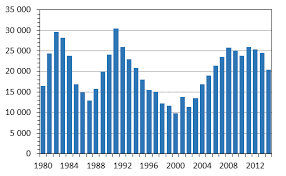 Working was most common in connection with university and university of applied sciences studies. Fifty-five per cent of university students and 54 per cent of university of applied sciences students had an employment contract while studying. Close on one-half of students attending upper secondary vocational education were employed during their studies. In 2015, the share of employed students in university education decreased most, by around one percentage point from the year before. More...
/https%3A%2F%2Fprofilepics.canalblog.com%2Fprofilepics%2F1%2F0%2F1076071.jpg)

