Canalblog Tous les blogs Top blogs Emploi, Enseignement & Etudes Tous les blogs Emploi, Enseignement & Etudes
Suivre ce blog Administration + Créer mon blog
MENU

Formation Continue du Supérieur

2 novembre 2013

The Decline of Wikipedia
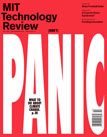
cover of latest MIT Technology Review magazine issueBy Tom Simonite. The sixth most widely used website in the world is not run anything like the others in the top 10. It is not operated by a sophisticated corporation but by a leaderless collection of volunteers who generally work under pseudonyms and habitually bicker with each other. It rarely tries new things in the hope of luring visitors; in fact, it has changed little in a decade. And yet every month 10 billion pages are viewed on the English version of Wikipedia alone. When a major news event takes place, such as the Boston Marathon bombings, complex, widely sourced entries spring up within hours and evolve by the minute. Because there is no other free information source like it, many online services rely on Wikipedia. Look something up on Google or ask Siri a question on your iPhone, and you’ll often get back tidbits of information pulled from the encyclopedia and delivered as straight-up facts.
Yet Wikipedia and its stated ambition to “compile the sum of all human knowledge” are in trouble. The volunteer workforce that built the project’s flagship, the English-language Wikipedia—and must defend it against vandalism, hoaxes, and manipulation—has shrunk by more than a third since 2007 and is still shrinking. Those participants left seem incapable of fixing the flaws that keep Wikipedia from becoming a high-quality encyclopedia by any standard, including the project’s own. Among the significant problems that aren’t getting resolved is the site’s skewed coverage: its entries on Pokemon and female porn stars are comprehensive, but its pages on female novelists or places in sub-Saharan Africa are sketchy. Authoritative entries remain elusive. Of the 1,000 articles that the project’s own volunteers have tagged as forming the core of a good encyclopedia, most don’t earn even Wikipedia’s own middle-­ranking quality scores. More...

2 novembre 2013

Harvard and MIT's Online Education Startup Has a New Way to Make Money

By . Even non-profits need to eat. It’s been about a year and a half since massive open online courses (MOOCs) achieved notoriety, and the industry now has three giants: Coursera, Udacity, and EdX. Coursera and Udacity are West Coast-run, Stanford-spawned, for-profit standard-style startups.
EdX is different: It launched as an East Coast, non-profit collaboration between Harvard and MIT.
EdX, then, is more of a mysteryAs a non-profit, it’s not concerned with, well, profit. But it is concerned with its own survival, so, this month, it debuted a new way of making money.
Until this fall, EdX had mimicked a tack Udacity and Coursera have taken: A “business-to-consumer” approach, in which students pay the course provider to verify their identity before they take a class on EdX.org, a kind of certification of achievement. More...

2 novembre 2013

Augmentation, not Replacement…

By Erik Duval. At the EADTU conference in wonderful Paris, France, MOOC’s are of course the dominant topic. And yes, of course, this crowd of “Distance Teaching Universities” feels a bit uncomfortable about newcomers that, not hindered by any knowledge of the domain, suddenly attract the press attention and the students, as well as the euros and dollars, in what was for decades their turf…
So, I was very happy to try and do a ‘mooc free’ talk, on learning analytics. The official title of my talk was “The Transformation of Higher Education and the role of Learning Analytics” – not a title I could have come up with. Although that title did include the proper amount of grandeur for a talk at the Sorbonne, it made me a bit uncomfortable, as I don’t know how to transform Higher Education. If I’ve learned anything over the past 2 decades, it is that Higher Education is remarkably resilient to any kind of deep change…

2 novembre 2013

The Habits of Highly Connected Learners

Stephen DownesSeminar presentation delivered to Integrating Technology 4 Active Lifelong Learning, Online, via WizIQ.

Presentation given to the Integrating Technology 4 Active Lifelong Learning WizIQ course October 20, 2013. In Part A I outline the major principles of successful networks - autonomy, diversity, interactivity, openness. This sets the stage for understanding the importance of the seven habits of connected learners in part B.

[Slides] [Video]

2 novembre 2013

Keynote presentation delivered to Open Access Week, Nova Scotia Community College

Stephen DownesOpen Access and Open Learning- Keynote presentation delivered to Open Access Week, Nova Scotia Community College, Online via BB Collaborate.
Over time, as resources have become more open, open learning has come to mean a form of learning where students can pick their own resources, identify their own learning goals, and set their own pace. More recently open learning has come to include concepts like open assessments and open credentials. In this talk, open learning advocate and pioneer I discuss the evolution of open learning, highlighting the vital role played by open access, and discuss current and future trends, including massive open online courses (MOOCs), learning analytics, and personal learning environments.

[Slides] [Audio] [Video]

2 novembre 2013

Charte des bonnes pratiques pour les organismes collecteurs paritaires agréés et les entreprises

http://www.charte-fpspp.org/sites/default/themes/fpspp/logo.pngConformément à la loi (art. L.6332-1-2 du code du travail), le FPSPP établit et publie la « Charte des bonnes pratiques pour les organismes collecteurs paritaires agréés et les entreprises ».
Charte des bonnes pratiques pour les OPCA et les entreprises

Par la présente Charte, les partenaires sociaux manifestent leur volonté de développer, en lien avec les OPCA et OPACIF et au service des entreprises et de leurs salariés :
    Des actions de formation qui répondent aux besoins des entreprises (en particulier les très petites, petites et moyennes entreprises) et des publics les plus en difficulté ;
    La lisibilité, la transparence et l’optimisation du fonctionnement des OPCA et OPACIF ;
    La qualité de l’offre de formation et son évaluation.
Cette Charte a une dimension évolutive, par l’enrichissement continu des bonnes pratiques identifiées au sein des réseaux. Les OPCA et les OPACIF s’engagent à faire vivre la présente Charte en participant à l’harmonisation des démarches, la promotion et la diffusion des bonnes pratiques identifiées dans leurs réseaux. Le FPSPP organise des travaux collectifs nécessaires à la mutualisation, la diffusion, la valorisation des bonnes pratiques et crée les conditions de la coopération entre les réseaux OPCA et OPACIF.
L’application de la « Charte des bonnes pratiques pour les OPCA et les entreprises » est une des conditions de l’agrément des OPCA et des OPACIF (art.L.6332-1 du code du travail).
Elle est publiée sur le site internet du FPSPP et sur chaque site d'OPCA et d'OPACIF, au sein d'un espace dédié et facilement accessible.
Visualiser la charte.

2 novembre 2013

English: why the discipline may not be 'too big to fail'

http://www.timeshighereducation.co.uk/magazine/graphics/logo.pngRobert Eaglestone and Simon Kövesi ponder the problems that could sink the subject. English, the biggest discipline in the arts and humanities, is beset by some of the roughest storms in its history – and, unlike some other subjects, it is almost totally unprepared. The ship is holed, the sails are ripped and yet the sailors – usually known for their loud dispute, critique and dialogue – are inert and silent.
English has always been intellectually dis-united. It has no common methodology, no shared aims. While from the outside people assume they know what English is (reading, thinking and writing about literature), those of us within the subject spend ages agonising about what and who we are. We’ve had theory wars and culture wars; we’ve fought over the canon, gender, race, genre, language, history and class; we’ve had Oedipal spats with drama academics (they left, mostly) and creative writers (they’re staying, mostly). And the truth is, literary critics like intellectual crises. We live for them, in fact. More...

2 novembre 2013

Higher education: it's good for you (and society)

http://www.timeshighereducation.co.uk/magazine/graphics/logo.pngBy Jack Grove. People who attend university are less likely to commit crime, drink heavily or smoke, according to a new database of evidence on the social benefits of higher education.
They are also more likely to vote, volunteer, have higher levels of tolerance and educate their children better than non-graduates, according to data contained in a research paper published by the Department for Business, Innovation and Skills on 1 November. More...

2 novembre 2013

Mooc rival OERu puts accreditation on menu

http://www.timeshighereducation.co.uk/magazine/graphics/logo.pngBy Chris Parr. A “university” that will allow students to study courses from 31 institutions around the world for free online is to launch this week – and is billed as a more attractive option than massive open online courses. 
Students who complete an Open Educational Resources University course will be able to pay a fee to have their work assessed for academic credit, which would then be recognised by all the universities participating in the OERu. More...

2 novembre 2013

Michel SAPIN participe à la signature du traité de fusion de la tête de réseau des Cap emploi

Ministère du Travail, de l’Emploi, de la Formation Professionnelle et du Dialogue Social - République française - Liberté, égalité, fraternitéMichel SAPIN, ministre du Travail, de l’Emploi, de la Formation professionnelle et du Dialogue social, a participé à la signature du traité de fusion de la tête de réseau des Cap emploi : UNITH (Union nationale pour l’insertion des travailleurs handicapés), CHEOPS (Confédération nationale handicap et emploi des organismes de placements spécialisés) et Ohé Promotée.

« Je suis très heureux de vous recevoir tous en ces murs pour la signature de ce traité qui va marquer l’acte de naissance officiel de la tête de réseau des Cap emploi », a déclaré Michel SAPIN.
Le label Cap emploi est né en 2000 de deux réseaux : UNITH et Ohé Prométhée. Les pouvoirs publics ont incité à la création d’une tête de réseau unique, ce qui a été fait fin 2011 avec la création d’une confédération rassemblant les deux réseaux : la Confédération Handicap & Emploi des Organismes de Placement Spécialisés (CHEOPS). « Du point de vue des pouvoirs publics, nous avons besoin d’un interlocuteur qui puisse à la fois se faire le relais des positions de ses membres et diffuser les grandes orientations de la politique de l’emploi », a expliqué le Ministre.
Cette signature du traité de fusion marque ainsi le terme de ce processus de rapprochement avec la création d’une tête de réseau unique.
Cette tête de réseau des Cap emploi a parmi ses missions de reconnaître les demandeurs d’emploi handicapés et de les aider à se professionnaliser. « Votre rôle est donc essentiel pour faciliter ces mises en relation, à la fois en aidant les demandeurs d’emploi à s’orienter ou se réorienter le cas échéant, et en appuyant les entreprises dans leurs recrutements afin de les amener à faire confiance à des profils de personnes qu’elles n’auraient pas forcément recrutées spontanément », a poursuivi Michel SAPIN.
« Tous ici nous le savons, les demandeurs d’emploi handicapés cumulent souvent plusieurs difficultés : au handicap est souvent associé un déficit de formation et un âge relativement avancé qui complique le retour vers l’emploi. Les demandeurs d’emploi handicapés ont donc besoin d’une attention particulière », a insisté Michel SAPIN en ajoutant qu’il a souhaité qu’une réflexion soit ouverte sur les critères d’orientation de Pôle emploi vers les Cap emploi, en lien avec le volume des cotraitances.

Newsletter
53 abonnés
Visiteurs
Depuis la création 2 803 155
Formation Continue du Supérieur
Archives