22 juillet 2013
22 juillet 2013
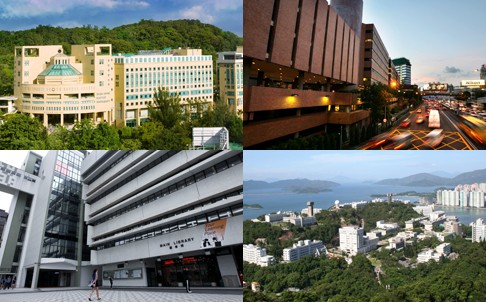
Two students for every place at university as competition in Hong Kong tightens
By Johnny Tam. Rise in secondary students gaining minimum admission score makes competition tougher. Competition for university places is tougher this year than last, as more secondary school students have achieved the minimum requirements for admission in the Hong Kong Diploma of Secondary Education (HKDSE) exam. Statistics released yesterday by the Hong Kong Examinations and Assessment Authority showed that of 82,283 students who took HKDSE exams this year, 28,418 obtained the minimum score for about 15,000 government-subsidised first-year university degree places through the joint admission system. Read more...22 juillet 2013
Seven IITs, Infosys, TCS, Cognizant and Nasscom team up to provide free online courses
22 juillet 2013
Universities Face a Rising Barrage of Cyberattacks
By RICHARD PÉREZ-PEÑA. America’s research universities, among the most open and robust centers of information exchange in the world, are increasingly coming under cyberattack, most of it thought to be from China, with millions of hacking attempts weekly. Campuses are being forced to tighten security, constrict their culture of openness and try to determine what has been stolen. University officials concede that some of the hacking attempts have succeeded. But they have declined to reveal specifics, other than those involving the theft of personal data like Social Security numbers. They acknowledge that they often do not learn of break-ins until much later, if ever, and that even after discovering the breaches they may not be able to tell what was taken. Read more...22 juillet 2013
Culture change needed to counter brain drain
By Cong Cao. The threat of a ‘brain drain’ has long lingered over China's ambitions to transform its economy from one reliant on low-cost manufacturing to one powered by home-grown innovation. Alert to the danger, Beijing has acted swiftly to counter the departure of its scientific and entrepreneurial talent overseas. Back in 2008, the Chinese Communist Party turned headhunter when it launched its ‘Thousand Talents’ scheme to tempt the brightest and best Chinese back to their homeland after periods studying and working abroad. Read more...22 juillet 2013
PASET – A World Bank initiative for skills development
By Goolam Mohamedbhai. A workshop held in Ethiopia’s capital Addis Ababa on 8-10 July 2013 brought together high-level representatives, in many cases led by a minister of education, from nine African countries and four emerging economic powers – China, Korea, India and Brazil. The workshop, which was convened and facilitated by the World Bank and hosted by the government of Ethiopia, was aimed at creating a Partnership in Applied Sciences, Engineering and Technology – PASET – between Sub-Saharan African countries and the emerging nations. Read more...22 juillet 2013
The rise of English in academe – A cautionary tale
By Rosemary Salomone. The rise of English as the global academic language is picking up legal steam in Europe. In late May, amid much controversy, the French National Assembly approved changes to the 1994 Toubon law. Those changes would ease restrictions on courses taught in English at French universities. The following day, a regional court in Italy went in the opposite direction, striking down plans at the elite Polytechnic University of Milan to offer all masters- and doctoral-level courses in English beginning with the 2014 academic year. Read more...22 juillet 2013
Richard Mawditt OBE on UNESCO, OECD commitment to HE
By Richard Mawditt. As one of your more mature readers I welcome Philip Altbach’s commentary of 30 June on the demise of UNESCO’s and OECD’s commitment to higher education policy matters and debate. His well-chosen words in firing carefully aimed bullets I sincerely hope will be a wake-up call to those two important agencies that have, as Philip says, “largely left the field of higher education, creating a considerable vacuum”. Read more...22 juillet 2013
Empire and higher education internationalisation
By Tamson Pietsch. At the start of the 21st century, we are acutely conscious that universities operate within an entangled world of international scholarly connection. Phrases such as ‘knowledge economy’, ‘internationalisation’ and ‘global competitiveness’ pepper the literature produced by universities and about them. Yet the global world of higher education is unequal, and some institutions and countries are better positioned in it than others. Such phrases can often serve to mask the social and institutional practices that help shape academic connections, and the uneven geographies that they entail. Read more...22 juillet 2013
India’s soft power moves in African higher education
By Maina Waruru. The fruits of a conference held in Delhi in 2008, hosted by the Indian government and attended by African heads of state, are beginning to ripen – perhaps more in the field of higher education than in any other area of cooperation. The Asian country is setting up a string of institutes and collaborations across Africa. The India-Africa Forum envisaged closer economic and cultural ties in a ‘soft power’ move seen by analysts as an effort by the emerging South Asian giant to make its mark alongside China. Read more...