Canalblog Tous les blogs Top blogs Emploi, Enseignement & Etudes Tous les blogs Emploi, Enseignement & Etudes
Suivre ce blog Administration + Créer mon blog
MENU

Formation Continue du Supérieur

28 juillet 2013

On open badges and informal assessment

Inge Ignatia de WaardBy Inge Ignatia de Waard. Although developing informal badges are one of the key debates in MOOCs and online learning in general today, not all institutes belief it to be worth investing. Which is a pity, as open badges in a more 'formal' (if that is possible) way might allow people to really add credentials to their name and build up a reputation (even an expertise) from there. My first encounter with informal badges was through discussion forums where the more reputed, helpful participants got several stars next to their name, indicating their answers were worth reading. But as time went by those informal badges captured the attention of public, learning projects. One of which was the iSpot project, a UK start-up that started out as a mobile learning project to allow amateur as well as expert explorers of the wild natural environment to exchange notes, learn from each other and gain extra expertise. Read more...
28 juillet 2013

In Connectivism, No One Can Hear You Scream: a Guide to Understanding the MOOC Novice

http://mediacdn.disqus.com/uploads/users/5668/3533/avatar92.jpg?1374920932By Keith Brennan. Introduction
I’m not a Constructivist, Behaviourist, Cognitivist, or Connectivist. This is not a call for a return to an older theory. I’m a pragmatist, like many educators. I flirt outrageously with every theory that will have me. I’m ideologically promiscuous. I go with what works, and I am ruthless in weeding out what doesn’t. I do this because there is no “one size fits all” theory. Because there is no “one size fits all” student. And because students, participants, and learners are the final metric that measures any theory, and experience is the proving ground for theory. Faith to a theory, ideological monogamy, gets in the way of the evidence. Read more...
28 juillet 2013

The MOOC Racket

http://www.slate.com/etc/designs/slate/images/mySlateLogoSmall.pngBy Jonathan Rees. Widespread online-only higher ed will be disastrous for students—and most professors. The word mooc sounds a bit like slang from Goodfellas or the affectionate shortening of the already-affectionate name of a former outfielder for the New York Mets. In fact, a MOOC is a new kind of college-like experience that seems to possess the magical power to turn some of the smartest people in academia into followers of a faith-based cult because they want to become its idols. MOOC stands for “massive open online course.” The term was coined by a group of Canadian academics in 2008 to represent a recently invented type of online class that depends upon small group interactions for most of the instruction. Read more...
28 juillet 2013

Mapping the landscape of Open Educational Resources institutional initiatives

https://unescochair.athabascau.ca/sites/unescochair.athabascau.ca/themes/unesco-chair/images/banner-sub.jpgOver the past decade, there have been more and more initiatives in more and more countries.  It has become difficult to have a sense of the OER landscape.  As we seek to explain Open Educational Resources to stakeholders, as we seek to connect with others and as we seek to learn from the experience of others, we might find useful a picture of the OER world – a global map of institutional (and perhaps national) initiatives as a starting point.  Over time, an “OER World Map” could be enhanced as the community wished and found feasible. Read more...
28 juillet 2013

Is there a link between flexible access and ‘productivity’ in higher education?

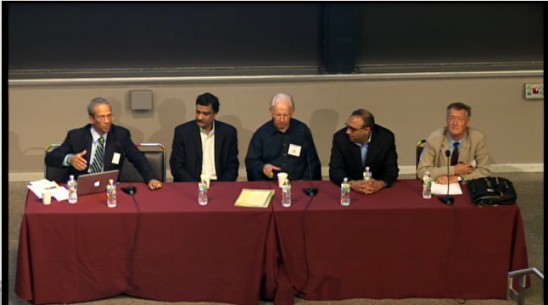
http://www.tonybates.ca/wp-content/uploads/MIT-MOOC-panel-548x305.jpgBy Tony Bates. This is the third in a series of posts about ways in which learning technologies and online learning could improve educational productivity in higher education. The first two posts were:

In response to my first post on this topic, Stephen Downes commented. Read more...

28 juillet 2013

What does the university of the future look like?

http://profile.ak.fbcdn.net/hprofile-ak-ash4/277035_6533373917_717582727_q.jpgBy David Evans. Conference organized by U of A brought leaders together to seek answers. “These things always start with budget cuts, don’t they?” Baroness Diana Warwick said with a wry, not-quite-cynical smile over a cup of tea in the restaurant of an Ottawa hotel. She was starting an explanation of how tuition fees of more than $15,000 a year became the poster child for change in higher education in a country once known as the birthplace of the welfare state, and still famously associated with the origins of the modern university. Read more...
28 juillet 2013

SIAST sees boom in international students

http://profile.ak.fbcdn.net/hprofile-ak-ash4/373031_164697223559731_475559954_q.jpgBy Jonathan Charlton. About five years ago, SIAST had just 30 international students across its four campuses.
Last year, it had 194.
Now, the college conservatively projects teaching around 300 international students next year, and double that number within two years.
"That's ridiculous growth," said Jason Mazzei, manager of international education.
Hosting international students is new for the college, he said. Read more...
28 juillet 2013

UW had no business being in Dubai

http://www.therecord.com/Portals/15/Images/logo.pngBy Luisa D'Amato. Don't be fooled by Dubai. Yes, the United Arab Emirates city has flashy shopping malls, a dynamic economy, and the world's tallest skyscraper. But at its core, the place is still cruelly medieval. And University of Waterloo is fortunate to have stepped away from it. Eager to establish an international presence, the university opened a campus there in 2009, to teach undergraduate math and engineering courses. Three years later, with student enrolment far below expectations, the board of governors voted to close it. Read more...
28 juillet 2013

Humanities are not in decline in Canada. Math is

Go to the Globe and Mail homepageBy Simona Chiose. Canadian universities often complain that the problems of the United States are unfairly tagged onto our institutions even though this country does not share many of the issues – student debt, for example – across the border. Here is another interesting difference. If a new number-crunching exercise is correct, female students in Canada follow a more “traditional” gender route in their education. Read more...
28 juillet 2013

Incredible promotion tool: student and postdoc outcomes

By David Kent. ast month, I found the best “come to my lab” sales pitch. After my jaw was set back into place at the numbers, I soon realized the broader implications of such a web page and its power as a general tool for academics. It takes virtually no effort to create and is something that every academic could (and should!) do. In fact, it is one of few things in this world that costs no money, takes no time, and could single-handedly alter the lives of a vast number of current and future trainees. Read more...
Newsletter
53 abonnés
Visiteurs
Depuis la création 2 803 144
Formation Continue du Supérieur
Archives