Canalblog Tous les blogs Top blogs Emploi, Enseignement & Etudes Tous les blogs Emploi, Enseignement & Etudes
Suivre ce blog Administration + Créer mon blog
MENU
Formation Continue du Supérieur
7 juillet 2013

Perfil de creadores de MOOCS en Iberoamerica. Redes sociales usadas, paises, dispositivos moviles

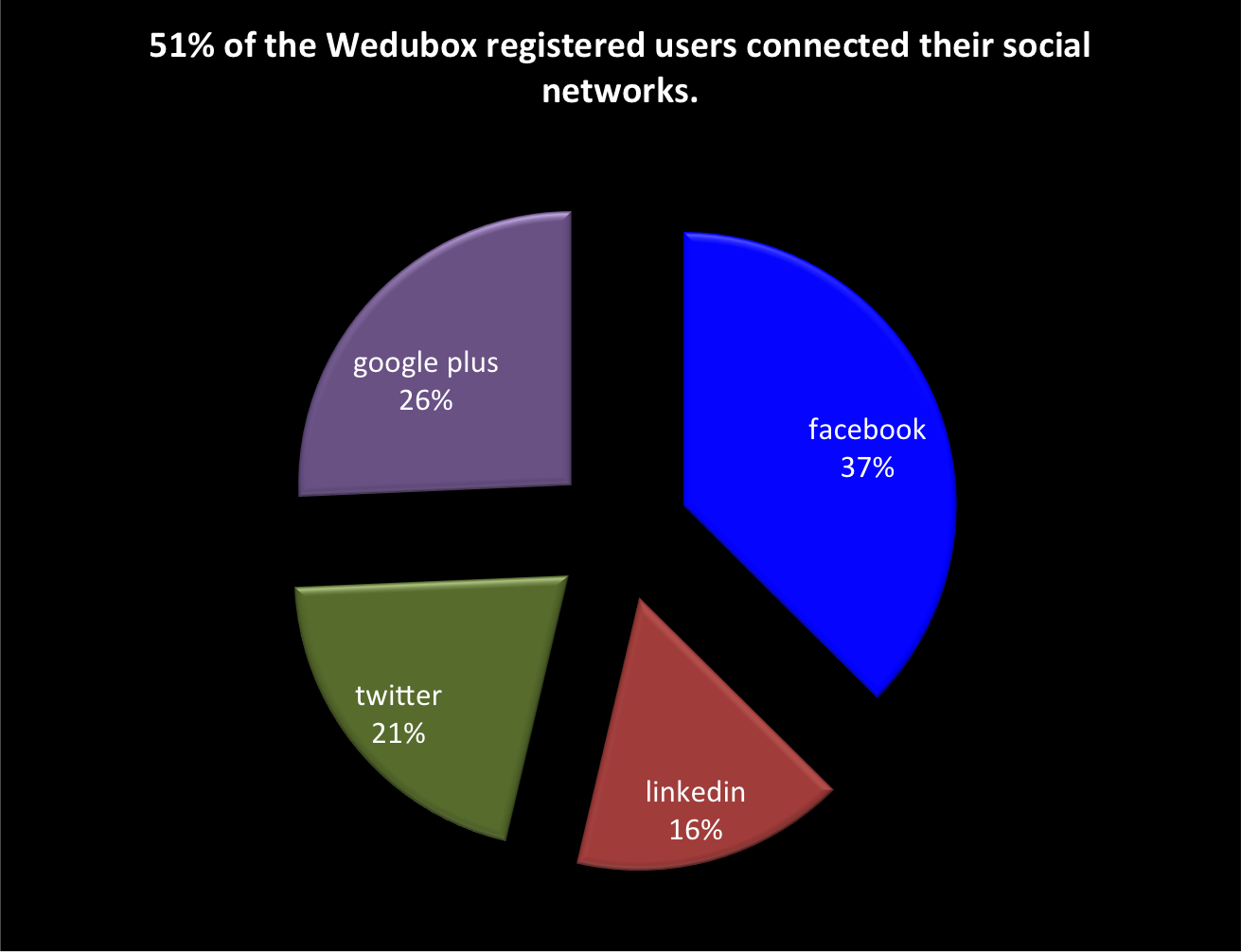
By . http://revistaeducacionvirtual.com/wp-content/uploads/2013/01/redes-sociales-moocs.pngNuestra revista de educación virtual tuvo acceso a las estadísticas detalladas de la mayor plataforma de MOOCs en español Wedubox, y hay unas tendencias muy interesantes en términos de cuales son las redes sociales que más utilizan los docentes, que dispositivos móviles usan los estudiantes para tomar cursos, los paises con docentes más activos creando MOOCS etc.
El 51% de los docentes registrados en Wedubox conectó su cuenta con alguna red social, siendo facebook la más usada con el 37%, seguida de cerca por google plus con el 26% (sorpresa), twitter con el 21% y linkedin el 16%. Facebook en primera posicion no es sorpresa, pero si lo es que solo le lleve 11 puntos a google quien supera a twitter, por lo visto los docentes son muy afines a los productos de google, probablemente influenciados por gmail principalmente.
6 juillet 2013

MOOCs Change Playing Field in Higher Education

http://www.indiawest.com/Image/logo.pngBy Richard Springer. The rapid spread of massive open online courses, or MOOCs, is transforming higher education in the U.S. and worldwide. U.S. universities and colleges are scrambling to formulate MOOC strategies, or risk being put on the defensive if they don’t have them.
Three MOOC providers are spearheading the MOOC proliferation: edX, a nonprofit launched by the Massachusetts Institute of Technology and Harvard with initial pledges of $30 million each; and Udacity and Coursera, two for-profit MOOC course providers with links to Stanford University. Anant Agarwal, former director of MIT’s artificial intelligence lab and president of edX, told India-West in an exclusive interview that 2012 was “the year of disruption” for higher education in the U.S. Read more...
6 juillet 2013

MOOCs: A Systematic Study of the Published Literature 2008-2012

http://www.irrodl.org/public/journals/4/pageHeaderTitleImage_en_US.pngBy Tharindu Rekha Liyanagunawardena, Andrew Alexandar Adams and Shirley Ann Williams. Massive open online courses (MOOCs) are a recent addition to the range of online learning options. Since 2008, MOOCs have been run by a variety of public and elite universities, especially in North America. Many academics have taken interest in MOOCs recognising the potential to deliver education around the globe on an unprecedented scale; some of these academics are taking a research-oriented perspective and academic papers describing their research are starting to appear in the traditional media of peer reviewed publications. This paper presents a systematic review of the published MOOC literature (2008-2012): Forty-five peer reviewed papers are identified through journals, database searches, searching the Web, and chaining from known sources to form the base for this review. We believe this is the first effort to systematically review literature relating to MOOCs, a fairly recent but massively popular phenomenon with a global reach. The review categorises the literature into eight different areas of interest, introductory, concept, case studies, educational theory, technology, participant focussed, provider focussed, and other, while also providing quantitative analysis of publications according to publication type, year of publication, and contributors. Future research directions guided by gaps in the literature are explored. Read more...
6 juillet 2013

Making sense of the MOOCs - Brussels, 10 October 2013

http://www.aca-secretariat.be/fileadmin/templates/2009/images/logosmall.jpg‘MOOC’ stands for Massive Open Online Course, which is a form of distance learning embraced not only by traditional providers of distance learning (e.g. open universities) but also the elites that are highly visible in global rankings. The MOOCment originated from North Americas about five years ago and has rapidly spread around the world, with China, India and recently Europe, all pledging to MOOC along. They do this either by using established big-name American MOOC platforms (e.g. Coursera, edX) or constructing their own (e.g. iversity and FutureLearn in Europe; icourse in China).
MOOC enthusiasts see the movement as a revolutionary change in the world of learning. MOOC sceptics regard it as another technological hype that may soon fade away. The openness of MOOCs is also being called into question when the providers start to attach a price tag to the use of the platform, the licensed content or the certification of the learning results. Besides, some MOOCs are no longer ‘courses’, but complete degree programmes. Some MOOCs were intended for massive enrolments but have attracted only a few. With rapid developments in the MOOC world, the MOOC today may be completely different from the MOOC tomorrow and the MOOC in one country may be defined differently from one in another country, depending on the orientation of the providers and the target audiences. Read more...
4 juillet 2013

Le MOOC ne remplace pas le travail en classe

http://www.vousnousils.fr/wp-content/themes/vousnousils_theme/images/logo-vousnousils.pngPar Quentin Duverger. Cours vidéo en ligne: "le MOOC ne remplace pas le travail en classe". Les MOOCs, cours fil­més gra­tuits et ouverts à tous, comptent de plus en plus d'adeptes. Elodie Buronfosse, direc­trice des actions éduca­tives de France Télévisions, nous explique les prin­cipes du MOOC philo lancé cette année pour aider les lycéens à révi­ser le bac.
Le MOOC est un mot à la mode dans le monde éduca­tif: com­ment définiriez-vous ce concept?

La tra­duc­tion lit­té­rale de cet acro­nyme amé­ri­cain est: "cours en ligne ouvert à tous". Le prin­cipe est de pro­po­ser gra­tui­te­ment des cours fil­més sur des pla­te­formes web, donc enri­chis de textes, d'échanges...
Sur le site Francetv éduca­tion, un MOOC philo a été lancé en mai pour aider à révi­ser le bac. Pourquoi avoir choisi la phi­lo­so­phie, et pas un MOOC maths ou fran­çais par exemple?

C'est un choix très ration­nel: la phi­lo­so­phie au bac est la matière qui a le tronc com­mun le plus vaste, avec 18 notions com­munes à toutes les filières. Suite de l'article...
http://www.vousnousils.fr/wp-content/themes/vousnousils_theme/images/logo-vousnousils.png Quentin Duverger. Online Video kursai. "Mooc nepakeičia darbo klasę." Į MOOCs, nufilmuotas per nemokama ir atvira visiems, remdamasi vis daugiau ir daugiau pasekėjų. Daugiau...
2 juillet 2013

A Francophone MOOCs platform will be launched by the end of the year

http://www.elearningeuropa.info/sites/default/files/elearning_papers.pngFrench leading telecommunications operator Orange is developing a platform to unite universities and graduate schools in a francophone Massive Open Online Courses (MOOC) platform that will be launched by the end of this year.
In a recent interview at L’Etudiant Thierry Curiale, Digital Education and MOOC Marketing Director at Orange, revealed his company’s plan to launch a francophone MOOC platform to address the growing need of lifelong learning tools in order allow citizens of all ages to acquire new skills and knowledge. According to Curiale, MOOCs big players like Coursera or edX, based in the United States, “have not yet invested in the Francophonie, even though there will be 700 million French-speakers in 2050, mainly because of the population explosion in Africa.” With the creation of a platform dedicated to promote MOOCs in French, especially in Africa, Orange aims to contribute to the widespread adoption of ITC in education. Several first-class publishers, universities and higher education institutions based in France and Africa have been approached to take part in this project and offer the first MOOCs of the platform, due to see the public light in the fourth quarter of 2013. The target of the project are French-speaking learners, but Curiale points out that they are not excluding the possibility of integrating MOOCs in English or any other language in the platform. More information.
1 juillet 2013

MOOCs, MIT and Magic

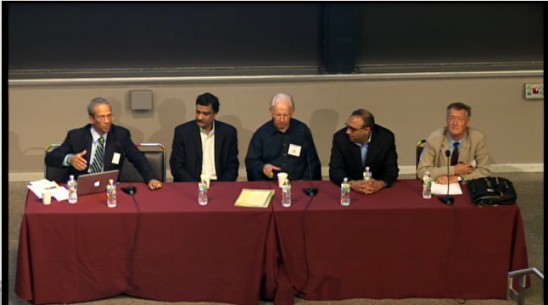
http://www.tonybates.ca/wp-content/uploads/MIT-MOOC-panel-548x305.jpgBy . In my previous post, there were two sessions at the LINC 2013 conference that referred specifically to MIT’s own strategies for technology-enabled learning within MIT. These resulted in my asking the following question towards the end of the conference:
Why is MIT ignoring 25 years of research into online learning and 100 years research into how students learn in its design of online courses?
This post then will discuss both why I think this is the case, based on MIT’s own presentations at the conference, and the broader implications for educational research and instructional design. Read more...
1 juillet 2013

Coursera under fire in MOOCs licensing row

https://gravatar.com/avatar/a9425cb5f69c7e7d48be077369938081?d=https%3A%2F%2Ftheconversation.com%2Fassets%2Fauthor%2Fthumb54_default-7c27474ca637b81dfcb7464665eb9456.jpg&r=pg&s=54By Megan Clement. A prominent member of the open education movement, former Open University Vice-Chancellor Sir John Daniel, has criticised online education provider Coursera for not making its materials available under creative commons licensing. Coursera is one of the largest providers of MOOCs – Massive Open Online Courses – which allow students to take university courses for free online from anywhere in the world. MOOCs have been credited with democratising higher education, making it available for those who cannot afford to attend prestigious universities. But providers like Coursera have come under fire in recent months for undermining academic jobs, not providing adequate accreditation, and, in this latest controversy, not adhering closely enough to the “open” part of the MOOC acronym. Read more...

1 juillet 2013

MOOC Leader EdX Turns One: What's Next?

http://twimgs.com/informationweek/1369/largecov.jpgBy Michael Fitzgerald. We know what EdX officials wished for when they blew out the candles on the cake. But what do we wish for them? Like anything in its infancy, MOOCs are full of possibilities and promise, but their path is unpredictable. I wish MOOCs had fewer problems. They can be just as flat and unengaging as a real-world lecture, maybe worse. We get dazzled by 150,000 people signing up, and forget that only 5% of them finish a class. Even the worst public schools do not suffer 95% dropout rates. That might not seem like a fair comparison; after all, communities make it harder to drop out of school. But MOOC students at least have gone through the process of registering for a class, so you would think they would want to complete it. Read more...

1 juillet 2013

Une typologie des MOOC

http://blog.educpros.fr/matthieu-cisel/files/2013/04/cropped-earth.jpgBlog Educpros de Matthieu Cisel. Autrefois nous n’avions que les cMOOC et les xMOOC, et déjà alors cette distinction était source de débats interminables. Désormais il semblerait qu’un nouveau type de MOOC apparaît chaque semaine: rMOOC, pMOOC, iMOOC, sMOOC, tMOOC et j’en passe. Comment se retrouver dans cette jungle d’acronymes dont les français sont si friands? Plutôt que de décortiquer tous les sigles que la Toile invente chaque semaine, nous allons proposer une ou plutôt des typologies adaptées à différents usages. Bienvenue dans l’incroyable monde des MOOC…
Dans l’article précédent, nous avions proposé une grille de lecture pour décrire l’anatomie d’un MOOC, et avions identifié cinq axes principaux: l’objectif pédagogique, le public visé, le type de ressources pédagogiques, les activités proposées, et le degré de contrainte. Suite de l'article...
http://blog.educpros.fr/matthieu-cisel/files/2013/04/cropped-earth.jpgBlog Educpros of Matthew Cisel. Formerly we had the cMOOC and xMOOC, and even then the distinction was a source of endless debates. Now it seems that a new type of MOOC appears every week: rMOOC, pMOOC, iMOOC, sMOOC, tMOOC and so on. More...
Newsletter
53 abonnés
Visiteurs
Depuis la création 2 803 195
Formation Continue du Supérieur
Archives