Canalblog Tous les blogs Top blogs Emploi, Enseignement & Etudes Tous les blogs Emploi, Enseignement & Etudes
Suivre ce blog Administration + Créer mon blog
MENU
Formation Continue du Supérieur
7 juillet 2013

India’s New Rules for Foreign Universities Are a ‘Missed Opportunity’

http://chronicle.com/img/photos/biz/icons/worldwise-nameplate.gifBy Jason Lane and Kevin Kinser. India appears to have finally agreed to a set of rules for establishing international branch campuses within its borders. This has been a long process, with many false starts and few conclusive decisions. And, as we have written previously, the nation desperately needs to expand access to higher education. Assuming that news reports are accurate, this time it looks like India is finally ready to open up its borders to foreign universities. Read more...
7 juillet 2013

Glass: my first encounter (and applying it to higher ed)

http://chronicle.com/img/photos/biz/icons/u-librarian-nameplate.gifBy Brian Mathews. Wow. I just experienced something special. This afternoon Gardner and I sat down with a Glass Explorer. It was a 60-minute meeting that turned into 160 minutes of mind bendiness. Flashback I was in high school when the transition from cassette tapes to CDs happened. I was in college when my roommates and I dialed into the Internet to figure out “what’s the web for?” I was in Atlanta when I first held an iPhone and then bought one the very next day. Flash Forward Those were all critical technology experiences for me. Today, in Blacksburg, I had another one… it was Glass. Read more...
7 juillet 2013

The Humanities: What Went Right?

http://chronicle.com/img/photos/biz/icons/the-conversation-newheader.pngBy Mark Bauerlein. There’s no denying it. The humanities have been through a crisis, a period in which, according to the Humanities Resource Center Online of the American Academy of Arts and Sciences, degrees went from 17.7 percent of all bachelor’s degrees awarded to 6.7 percent. The absolute number of degrees awarded in the humanities declined, from 99,280 to 65,423—during a period when total undergraduate enrollments at American colleges, according to the National Center for Education Statistics, increased by over 80 percent. The vice chancellor of a major public-university system boldly proclaimed, in the pages of The New York Times, that “the liberal-arts era is over.” Read more...
7 juillet 2013

Faster Outreach to Students, Through a Mobile App

http://chronicle.com/img/photos/biz/icons/wired-campus-nameplate.gifBy Sara Grossman. The creators of a new mobile application are aiming to improve colleges’ engagement with students, using pop-up messages to survey students and aggregate data in real time. The app, Student Engauge, is part of a larger trend toward mobile outreach, as colleges seek ways to engage with students who often don’t respond to e-mails or online pestering, says Justin Reich, a fellow at Harvard University’s Berkman Center for Internet and Society. The app follows in the path of mobile warning messages that many colleges have adopted to alert students of campus emergencies. Read more...
7 juillet 2013

American MOOC Providers Face International Competition

http://chronicle.com/img/photos/biz/icons/wired-campus-nameplate.gifBy Sara Grossman. Although talk of providers of MOOCs, or massive open online courses, has centered mostly on American companies and nonprofit organizations like Coursera and edX, MOOC platforms in other countries have made it clear that they are also looking to stake a claim in this growing realm of higher education. Read more...
7 juillet 2013

Monsters U.’s Site Just Might Give You ‘Web-Site Envy’

http://chronicle.com/img/photos/biz/icons/headcount-newnameplate.gifBy Eric Hoover. OK, I’ll admit that I’ve yet to see Monsters University, the No. 1 movie in the nation. But I’ve spent a good hour tooling around the promotional Web site for the fictional institution. It’s scary good. Fascinated by how this portal both mimics and mocks real-life college Web sites, I asked Ashley Hennigan, assistant director of social-media strategy at Cornell University, to share her thoughts on the MU site—and what admissions officers might learn from it. Read more...
7 juillet 2013

Jump in Student-Loan Interest Rates Will Cost Colleges, Too

http://chronicle.com/img/photos/biz/icons/bottom-line-header.pngBy Lee Gardner. In addition to the increased costs for borrowers and the possible political costs for Congress, the doubling of interest rates on federally subsidized student loans could cost colleges, too, according to a report released on Monday.
By letting the rate on the student loans rise from 3.4 percent to 6.8 percent, effective on Monday, Congress created a “credit negative” for American colleges, according to the report from Moody’s Investors Service, which rates debt securities. In its weekly report to subscribers, Moody’s analysts said that the higher interest rate will increase “the cost of student borrowing at a time when many tuition-dependent colleges are already struggling to maintain enrollment and grow revenue.” Read more...
7 juillet 2013

The Humanities, Declining? Not According to the Numbers

http://chronicle.com/img/subscribe-footer.pngBy Michael Bérubé. In recent years, enrollments in the humanities have plummeted. The evidence is everywhere: Last month, in The New York Times, Verlyn Klinkenborg noted "the recent shift away from the humanities" in an essay titled "The Decline and Fall of the English Major." In his 2009 American Scholar essay, "The Decline of the English Department," William M. Chace noted that English accounted for 7.6 percent of all bachelor's degrees in 1970-71, but only 3.9 percent in 2003-4. "If nothing is done to put an end to the process of disintegration, the numbers will continue in a steady downward spiral," he warned. A few weeks ago in these pages, Mark Bauerlein cited similar numbers, concluding, "English has gone from a major unit in the university to a minor one." In November 2010, the MSNBC anchor Tamron Hall remarked with alarm that "students wanting to take up majors like art history and literature are now making the jump to more-specialized fields like business and economics, and it's getting worse." A chart appeared on-screen. "Just look at this," she said. "In 2007 just 8 percent of bachelor's degrees were given to disciplines in the humanities." In 1966 that figure had been 17.4 percent. Read more...
7 juillet 2013

Nuestra Crisis (Laboral) de Educación: Envíen los MOOC!!!!

http://revistaeducacionvirtual.com/wp-content/uploads/2013/02/moocss.jpegBy .Por Chris Farrel para Bloomberg Newsweek. publicado en septiembre de 2012. En el comienzo de los 90, el fallecido economista de trabajo Jacob Mincer reunió a un grupo de periodistas y estudiantes en una conferencia en la Universidad de Columbia. Mincer quería hablar acerca del rol que la educación jugo en ampliar la desigualdad de ingreso/salario.
Entre los participantes estaba Fischer Black, un socio de Goldman Sachs (GS), legendario experto en análisis cuantitativo, y Co-creador del famoso modelo de precio “Black-Sholes”.
La conversación fue alrededor de que incidía para ampliar el hueco de los ingresos entre los trabajadores con un diploma de escuela secundaria únicamente y aquellos con un grado universitario. Black no dijo nada por un largo periodo de tiempo. De repente, el recalco “Por qué estamos hablando tanto sobre la escuela? Lo que se aprende en el sitio de trabajo es nueve a once veces lo que se aprende en la escuela. Yo no sé el número exacto, pero parece un estimado razonable”. Més...
7 juillet 2013

Perfil de creadores de MOOCS en Iberoamerica. Redes sociales usadas, paises, dispositivos moviles

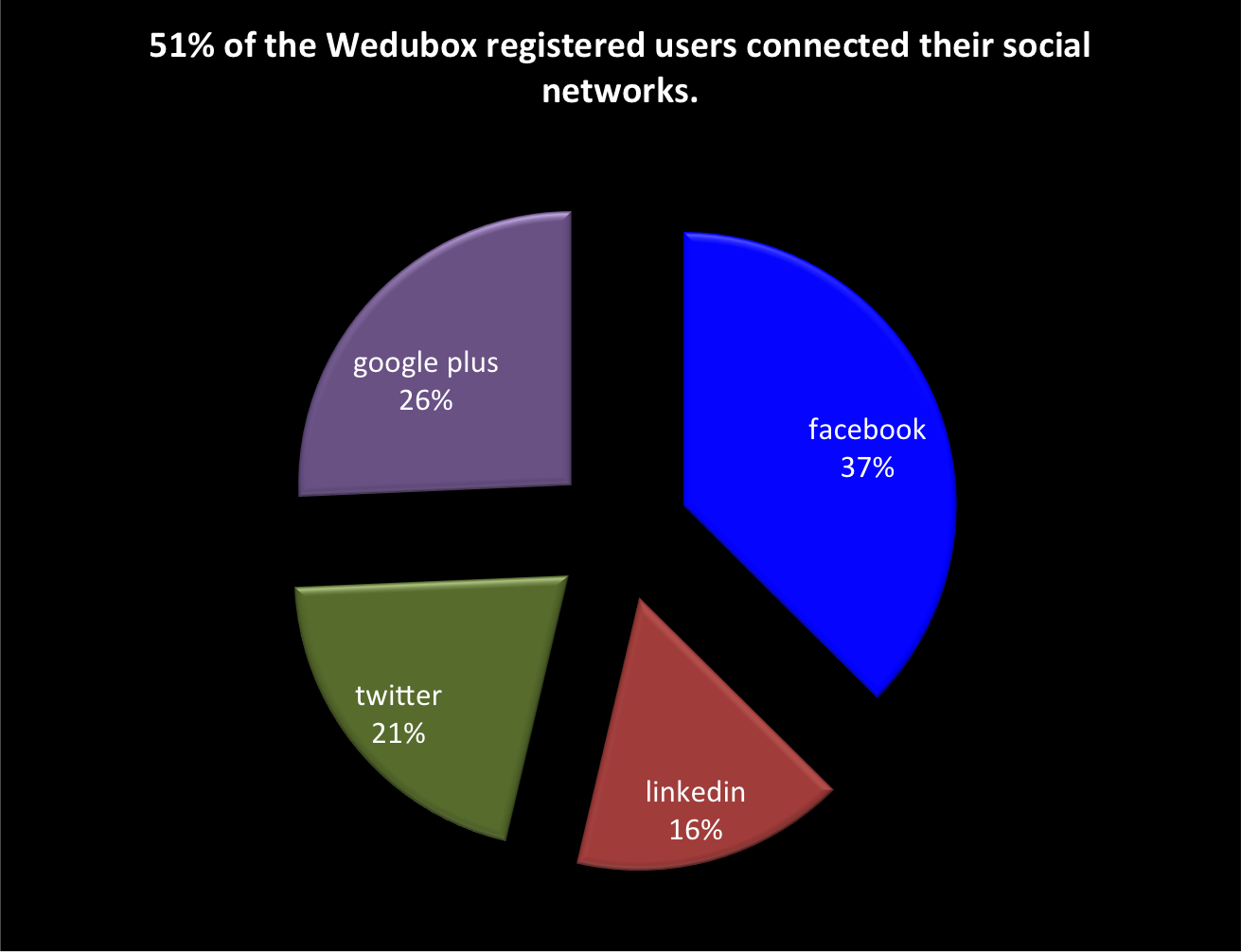
By . http://revistaeducacionvirtual.com/wp-content/uploads/2013/01/redes-sociales-moocs.pngNuestra revista de educación virtual tuvo acceso a las estadísticas detalladas de la mayor plataforma de MOOCs en español Wedubox, y hay unas tendencias muy interesantes en términos de cuales son las redes sociales que más utilizan los docentes, que dispositivos móviles usan los estudiantes para tomar cursos, los paises con docentes más activos creando MOOCS etc.
El 51% de los docentes registrados en Wedubox conectó su cuenta con alguna red social, siendo facebook la más usada con el 37%, seguida de cerca por google plus con el 26% (sorpresa), twitter con el 21% y linkedin el 16%. Facebook en primera posicion no es sorpresa, pero si lo es que solo le lleve 11 puntos a google quien supera a twitter, por lo visto los docentes son muy afines a los productos de google, probablemente influenciados por gmail principalmente.
Newsletter
53 abonnés
Visiteurs
Depuis la création 2 803 162
Formation Continue du Supérieur
Archives