

Cedefop Publications 9
 Cedefop Publications. More...


Vocational education and training in Poland is mostly organised in schools and is known as ‘vocational education’. It is undergoing major reform to improve quality and labour-market relevance, with increasing focus on improving system flexibility and responsiveness to labour-market needs. The measures taken include greater involvement of employers in curriculum design and assessment, modernisation of vocational qualification classifications, moving to a learning outcomes approach, and making it more attractive for highly qualified specialists to work in vocational schools. Vocational education is also being opened to adults, who may use it to obtain a vocational qualification.
The report summarises the country’s socioeconomic background and planned VET reforms. It explains how VET for young people and adults is currently organised and addresses topics such as teachers and trainers, guidance and counselling, and financing.


Vocational education and training in Hungary has been in a state of flux since the political and economic changes of 1989. The 2000s brought two fundamental reforms: introduction of a competence-based, modular qualification structure and ongoing corresponding renewal of curricula, and concentration of the extremely fragmented institutional system into regional integrated vocational training centres. At the same time, however, mainly due to low prestige of blue-collar jobs and much higher returns to general education, young people only choose skilled workers’ training as a last resort. Adult learning rates are also persistently well below the EU average.
Actors in the economy have long expressed discontent with the quality and quantity of skilled workers. As a result, in the past decade VET policy has continuously strengthened the role of social partners and, in particular, the chambers. Since 2010, the new administration has been devoted to increasing the latter’s role further and now places more emphasis on practical training, while allowing VET to start at an earlier age. The ultimate goal is to increase the attractiveness of VET and raise the proportion of students studying in vocational programmes.


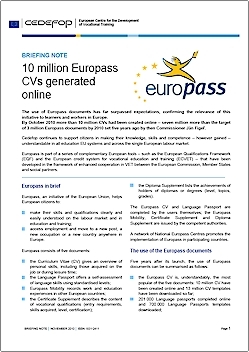


This review of socially responsible restructuring and effective strategies for supporting redundant workers provides practical evidence of the contributions of career guidance to socially responsible restructuring.


/https%3A%2F%2Fp1.storage.canalblog.com%2F20%2F55%2F1154600%2F122555108.png)
/https%3A%2F%2Fencrypted-tbn2.gstatic.com%2Fimages%3Fq%3Dtbn%3AANd9GcTi5Hkm0uJx8RuXLdIN4NSGeutjLR0NZnG3tTJBq9IYhTpD2Hdf5SvxmA)
/https%3A%2F%2Fprofilepics.canalblog.com%2Fprofilepics%2F1%2F0%2F1076071.jpg)